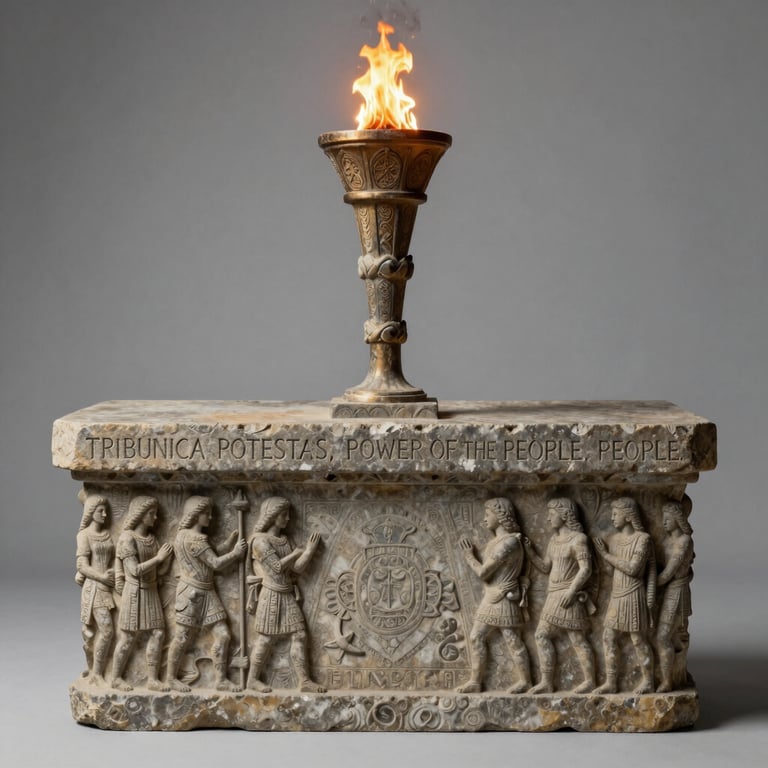
Royal Priesthood — Libera Res Publica — Sovereign Covenant —
God’s eternal agreement with humanity.
In Daniel 11:22, the phrase “prince of the covenant” appears in prophetic context—many scholars see this as a reference to Onias III, the high priest slain under Antiochus IV, symbolizing the breaking of priestly fidelity. But in full biblical revelation, Jesus Christ is the true and final Prince of the Covenant—not a victim of it, but its Author (Hebrews 12:2).
He is:
- Prince—ruler over all powers (Daniel 12:1; Acts 5:31),
- Of the Covenant—the Mediator of the New Covenant (Hebrews 8:6; 9:15),
- Anointed One—foretold in Daniel 9:25: “the Messiah the Prince.”
He fulfills what the Levitical system only shadowed. He is not only King and High Priest, but Eternal Son, reigning from Zion (Psalm 2:6; 110:4).
Thus, the archaic title that covers all we have studied—covenant, kingdom, priesthood, authority, and restoration—is:
The Prince of the Everlasting Covenant, High Priest of Heaven, and King of All Nations
—He who was, and is, and is to come.
This title reflects His supremacy over law, priesthood, and government—restoring all things to the original Libera Res Publica under God.
PRINCE OF THE COVENANT
The Nature of Christ’s Kingdom and Ancient Israel’s Republic
Jesus Christ did not come to establish a political regime within the framework of Roman or any earthly empire. When He declared before Pontius Pilate, “My kingdom is not of this world” (John 18:36), He was not denying kingship, but redefining it.
His statement was a constitutional distinction: His authority did not originate from human institutions, nor was it subject to them. He operated under a higher jurisdiction—divine law, rooted in the covenant order established with Ancient Israel.
This order, often mislabeled merely as a theocracy, functioned as a self-governing, theonomic republic where God was the sovereign, but the people held rights, responsibilities, and mechanisms of justice under His law.
The modern world fails to grasp this because it conflates all governance with state power. But early Israel was not a centralized monarchy at its foundation—it was a decentralized, tribal federation governed by divine law, elected judges, and local accountability.
This is the fireproof core of evidence—not argued, but declared. Not defended, but self-evident.
Ancient Israel A Pure-Republic
Before the demand for a king (1 Samuel 8), Israel existed for centuries without a centralized ruler. From the Exodus to the period of the Judges, governance was based on a covenantal structure established at Sinai. The Law of Moses (Exodus 20; Deuteronomy 5) served as Israel’s constitution. It defined civil, religious, and social order—not through top-down coercion, but through local administration.
Moses himself said:
Deuteronomy 1:13 (Geneva Bible) states:
“Take you wise men, and understanding, and known among your tribes, and I will make them rulers over you.”
The Geneva Bible commentary on this verse highlights that leadership in Israel was to be chosen from among the people—wise, experienced, and recognized by their communities. These leaders were not imposed, but selected by tribal consensus and then appointed by Moses under divine direction. This reflects a system of representative governance, where authority was decentralized and rooted in communal recognition, consistent with Israel’s structure as a theonomic republic governed by divine law and human accountability.
This was not modern day monarchy. It was delegation of judicial authority to elected leaders—elders and judges—who ruled under divine law. The people chose their leaders; God provided the law. This system is best described as a theonomic republic: God as the ultimate sovereign, but governance carried out by human agents under strict constitutional limits.
The Law prohibited the king from multiplying horses, wives, or silver (Deuteronomy 17:16–17), and required him to carry a copy of the Law and obey it (Deuteronomy 17:18–20). The king was not above the law—he was under it. Even when kingship was established, the republic did not end; it was modified, not abolished.
Historians and scholars such as those cited in The Polity in Biblical Israel (JCPA) affirm that biblical government was not mandated as monarchy. Rather, kingship was permitted with warnings, and the prophets often referred to kings not as melech (absolute king), but as nagid—a “prince” or “commissioned leader” under God.
Ancient Israel government structure
“prince” in Scripture can mean king, ruler, or priest, depending on the Hebrew word used.
The Hebrew word נָגִיד (nagid), often translated “prince,” means a commander or leader—civil, military, or religious—and is used for:
- Kings: Saul (1 Samuel 9:16), David (1 Samuel 13:14), and Solomon (1 Kings 1:35) were all called nagid, showing that “prince” here means God-appointed king.
- Priests: Pashhur, a high official in the temple, is called “chief officer” or “prince” over the house of the Lord (Jeremiah 20:1; 1 Chronicles 9:11).
- Messiah: Daniel 9:25 calls the coming Savior “Messiah the Prince” (*nagid*), linking kingship and divine appointment.
Additionally, “prince” can refer to:
- Priests: 1 Chronicles 24:5 speaks of “princes of the sanctuary and princes of God.”
- Angelic beings: Michael is called “your prince” (Daniel 10:21) and “the great prince” (Daniel 12:1).
- Foreign rulers: The “prince of Tyre” (Ezekiel 28:2) or “prince of Persia” (Daniel 10:13).
Thus, “prince” in Scripture is not limited to royalty—it encompasses kings, priests, commanders, and even heavenly beings, all under divine authority.
Elders in ancient Israel were both rulers and judges, sharing authority with nagid (princes/kings) and priests.
Scripture shows elders as: - Representatives of the people (Exodus 3:16; 12:21) - Governing leaders (Exodus 18:12; Deuteronomy 1:13–17) - Judicial authorities (Deuteronomy 19:12; 21:2–3) - Advisors to kings (1 Samuel 8:4; 2 Samuel 5:3) - Members of the ruling council (1 Kings 20:7; Jeremiah 29:1)
They functioned as judges—not just in court cases, but as rulers (*shaphat*, meaning “to govern”). The book of Judges describes leaders like Othniel, Deborah, and Gideon who “judged Israel”—meaning they delivered, ruled, and governed (Judges 2:16–18).
Even in exile, elders remained leaders (Ezekiel 8:1; Jeremiah 29:1). They were not lesser than princes—they were foundational to Israel’s theonomic republic, sharing in judicial, civil, and spiritual oversight.
Royal Priesthood implies princely status—spiritually and legally.
In 1 Peter 2:9, believers are called: “A chosen generation, a royal priesthood, a holy nation, a people for God’s own possession.”
The Greek term βασίλειον ἱεράτευμα (basileion hierateuma) means “king-priesthood”—not just royal in honor, but invested with kingly authority and priestly function.
This is recorded in Exodus 19:6:
“You shall be to Me a kingdom of priests and a holy nation.”
A “kingdom of priests” means the entire nation holds both offices: king and priest. This was unique—under the Old Covenant, no man could be both (e.g., Saul was rejected for offering sacrifice, 1 Samuel 13:9–13).
But under the New Covenant, all believers are:
- Kings—ruling in life through Christ (Romans 5:17), possessing authority in Him.
- Priests—offering spiritual sacrifices, entering God’s presence (Hebrews 10:19–22).
- Princes—as sons of the King, they inherit princely status (Matthew 20:23; Revelation 1:6).
The term “prince” (Hebrew nagid, Greek archon) applies to:
- David, the anointed ruler (1 Samuel 13:14)
- The Messiah (Daniel 9:25: “Messiah the Prince”)
- Michael, “the great prince” (Daniel 12:1)
- Believers, as heirs of God and joint-heirs with Christ (Romans 8:17)
Thus, royal priesthood = king + priest + prince—a divine elevation of every believer into covenant authority, dignity, and service.
Chief Prince
The Order of Melchizedek is the only true priesthood because it belongs solely to Christ, the eternal King-Priest, and extends to those who are conformed to His image.
Scripture declares:
“You are a priest forever, in the order of Melchizedek.” (Psalm 110:4; Hebrews 7:17)
This order is:
- Eternal—not bound by lineage or death (Hebrews 7:3, 24).
- Royal—uniting king and priest in one Person (Zechariah 6:13).
- Superior—greater than Levi, Abraham, and all earthly systems (Hebrews 7:4–10).
False priests serve men; Melchizedek served the Most High God (Genesis 14:18).
False priesthoods multiply; this order has one Head—Christ (Hebrews 7:23–24).
They offer dead works; He offered Himself—once for all (Hebrews 9:12).
Believers are called kings and priests (Revelation 1:6), not in a separate order, but in Him—sharing His status, authority, and mission.
Thus, the only true men on earth are those born of God, serving under His law, in His order, as elders, princes, and priests—preparing to reign with Christ.
A divine indictment against corrupt religious leaders who claim priestly authority but serve only themselves.
Pagan priests are not God’s priests or princes—because they do not serve Yahweh, nor do they operate under His law.
Scripture Declares:
Ezekiel 22:26 —
Wycliffe (1395):
"Her preestis han violat my lawe, and defouled my holy thingis; thei han put no differenc between holy and common, neither han shewid differenc between unclene and clene; and thei han hidde here yen fro my sabbathis, and I am defouled amonge hem."
Geneva Bible (1599):
"Her priests have violated my law, and have profaned mine holy things: they have put no difference between the holy and profane, neither have they shewed [difference] between the unclean and the clean, and have hid their eyes from my sabbaths, and I am profaned among them."
King James Version (1611):
"Her priests have violated my law, and have profaned mine holy things: they have put no difference between the holy and profane, neither have they shewed difference between the unclean and the clean, and have hid their eyes from my sabbaths, and I am profaned among them."
All three translations convey the same uncompromising truth:
The priests—ordained to teach, guard, and distinguish—have failed utterly. They:
- Violate God’s law (actively rebel),
- Profane holy things (treat sacred items and offices as common),
- Blindly mix holy and profane, clean and unclean (erase divine distinctions),
- Ignore the Sabbath (reject God’s appointed time),
- And thus, cause God to be profaned among His people.
This is not mere negligence—it is spiritual treason. These are not God’s priests. They are false ministers, operating in man-made systems, serving paganized temples, and nullifying divine order.
True priests uphold God’s law. False priests dismantle it—and lead nations into captivity.
This applies not only to apostate Israel but to all who claim priestly authority apart from God’s covenant. Pagan priesthoods—whether in ancient temples or modern religious systems—governments- kingdoms-**Nullify God’s Law** by:
- Substituting truth with tradition (Mark 7:9, 13),
- Teaching lies (Jeremiah 5:31),
- Serving human rulers instead of the King of kings.
True priesthood belongs only to those who:
- Serve under Melchizedek’s order (Genesis 14:18; Psalm 110:4),
- Uphold God’s law (Deuteronomy 33:10),
- Are consecrated by Him—not by men.
False priests may wear robes, build temples, and demand honor—but they have no authority from above. Christ alone is the true High Priest (Hebrews 4:14), and His followers are a royal priesthood (1 Peter 2:9)—not by lineage, but by covenant.
Pagan systems produce slaves. God’s kingdom produces free men, restored to their inheritance under Leviticus 25:10.
Order of Melchizedek
The Chief Prince, High Priest, and King is Jesus Christ.
He is:
- Chief Prince (Daniel 12:1; Revelation 12:7): Michael, the “great prince,” is identified in Scripture as Christ—the head of all angelic powers, the commander of heaven’s armies.
- High Priest (Hebrews 4:14; 7:1–28): Not of Levi, but “after the order of Melchizedek”—a priest forever, not by lineage, but by divine oath.
- King of Kings and Lord of Lords (Revelation 19:16): The only one worthy to rule all nations with a rod of iron.
No man, angel, or false priest holds this authority. It belongs solely to Christ.
—The One who stands over all principalities, mediates before the Father, and reigns by divine right.
This title reflects His supreme authority over law, priesthood, and kingship—the fulcrum of all true government. All others on earth are dust.
Prince of the Covenant, High Priest of Heaven, King Eternal
Leviticus 25: The Divine Charter of Liberty
The core of Israel’s republican liberty is found in Leviticus 25, particularly verse 10:
Leviticus 25:10 in the Geneva Bible (1599) reads:
“And ye shall hallow the fiftieth year, and proclaim liberty throughout [all] the land unto all the inhabitants thereof: it shall be a jubile unto you; and ye shall return every man unto his possession, and ye shall return every man unto his family.”
The Geneva Bible’s footnotes clarify:
“Hallow” means to set apart as holy—this year is sacred, not ordinary.
“Liberty” refers to the release of Hebrew slaves and the return of ancestral land.
“All the inhabitants thereof” specifically includes those in bondage (f), emphasizing universal restoration within Israel.
“Return every man unto his possession” (g) ensures tribal inheritances remain intact—land reverts to original families, preventing permanent dispossession.
This law reflects God’s ownership of the land (Leviticus 25:23) and establishes a divinely ordered economic reset—Jubilee—every 50 years. It was a constitutional safeguard against tyranny, debt slavery, and wealth concentration.
This is law.
The Year of Jubilee was a mandatory reset of economic and social equity:
All sold land reverted to original families.
Hebrew slaves were freed.
Debts were released.
Land could not be permanently sold because, as Leviticus 25:23 states:
“The land shall not be sold in perpetuity, for the land is Mine. For you are strangers and sojourners with Me.”
This principle establishes two foundational truths:
God owns the earth—not kings, not states, not corporations.
People have inalienable rights to family inheritance and freedom from perpetual bondage.
This was not socialism. It was divinely ordained property rights with built-in protections against oligarchy and generational poverty. It ensured that no family could be permanently disinherited—no man made a permanent slave.
This is the true meaning of liberty in the Hebraic tradition: not mere freedom to choose, but freedom to return—to one’s land, one’s family, one’s dignity.
Leviticus 25 Jubilee year explained
Jesus Before Pilate: A Kingdom Not of This World
When Jesus stood before Pilate, He was not evading authority. He was asserting a higher one.
Pilate asked: “Are you the King of the Jews?” (John 18:33).
Jesus replied:
“My kingdom is not of this world. If my kingdom were of this world, my servants would be fighting, so that I might not be delivered over to the Jews. But my kingdom is not from here.” (John 18:36)
This was not a denial of kingship. It was a denial of earthly jurisdiction. Jesus was saying:
My authority does not come from Rome.
My kingdom does not operate by violence or coercion.
My citizens do not wage war to defend Me.
He had already rebuked Peter for using a sword in Gethsemane: “Put your sword into its place. For all who take the sword will perish by the sword.” (Matthew 26:52)
Jesus’ kingdom advances by truth, sacrifice, and resurrection—not by armies or treaties. Pilate, as governor of Judea, had no legal authority over a kingdom that did not arise from human decree. He could not try a divine covenant.
Moreover, under Israelite law, making a treaty with a foreign power was an act of rebellion against God (Isaiah 31:1)
Jesus would not appeal to Rome, because to do so would be to submit God’s government to a pagan jurisdiction—an abdication of divine sovereignty.
Jesus my kingdom is not of this world meaning
The Jurisdictional Divide: Rome vs. God’s Government
Rome claimed universal jurisdiction: cuius regio, eius religio—whose realm, his religion. Caesar was god. The emperor was head of state, army, and religion.
Early Israel’s system was the opposite:
God was King (1 Samuel 12:12).
The people were His covenant partners.
The land was held in trust, not owned.
Leaders were servants under law.
When the people demanded a king “like all the nations” (1 Samuel 8:5), God told Samuel:
“They have not rejected you, but they have rejected Me from being king over them.” (1 Samuel 8:7)
The demand for a human king was a rejection of the original republic—the theonomic order where God ruled through law, judges, and family-based property rights. Landed. Alodial.
Jesus came to restore that original order—not by political revolution, but by fulfilling the covenant. He is the true heir of David, the bringer of Jubilee (Luke 4:18–19), the one who proclaims liberty to the captives. have you been hearing his voice or the voice of Babylon?
His kingdom is not of this world, but it is in this world—calling people back to God’s government: just weights, restored inheritance, and freedom from debt and slavery.
Returning to God-Endowed Rights
The world today does not question why Jesus said His kingdom was not of this world because it no longer remembers what a true republic looks like. Modern states claim total jurisdiction over land, bodies, and consciences. They issue false weight currency, draft citizens into armies, tax inheritances, and permit indefinite debt bondage.
But in early Israel, none of these powers belonged to the state. They were limited by divine law.
Jesus’ declaration before Pilate was not an escape from politics. It was a constitutional assertion:
I am King.
My authority comes from God.
My kingdom operates under Leviticus 25.
I restore every man to his inheritance.
To live under Christ’s kingdom is to reject voluntary slavery to human systems that deny God-given rights. It is to recognize that all land belongs to God, all persons are free, and all power is delegated—not inherent.
This is not a dream. It is a return to the original charter:
Libera res publica—A free republic under God.
No compromise. Only fact. Only law. Only liberty.
Early Israel was a self-governing, theonomic republic under God’s direct rule—no king, no centralized state, no military draft. Leaders were chosen by tribes (Deuteronomy 1:13), justice was local, and land was inalienably tied to families under Leviticus 25:10. This was not democracy—democracy is mob rule, where the majority can violate minority rights. Israel’s system was law-governed liberty: God owned the land, people held rights by covenant, and power was strictly limited.
Modern democracies, by contrast, operate on "Mob Rule" popular will, not divine law. They elect rulers who violate Deuteronomy 17:16—-Exactly As Warned:
“The king must not acquire many horses for himself, nor cause the people to return to Egypt to acquire them.” (Deuteronomy 17:16, NLT)
This wasn’t just about horses. Egypt symbolized return to bondage. Today, governments:
- Build massive militaries (horses).
- Enslave citizens through debt, taxation, and conscription.
- Make alliances with foreign powers—returning spiritually to Egypt.
They do this under elected leaders—democratic “kings”—who centralize power, multiply laws, and strip inheritance rights through taxation and zoning. The people consent, but they are enslaved voluntarily, unaware they’ve broken God’s order.
Jesus warned of this trap. Psalm 69:22 prophesies:
“Let their table become a snare; and that which should have been for their welfare, let it become a trap.” (Psalm 69:22, KJV)
Their “table”—prosperity, elections, social systems, welfare, military strength—becomes the very mechanism of their downfall. They trust in democracy, economy, and state power, but these become snares because they replaced God’s government.
The people remain stuck in the same time trap:
- They demand a king (1 Samuel 8:5).
- God allows it, but warns of conscription, taxation, and lost liberty.
- They ignore it.
- They are enslaved.
- They repeat the cycle.
Democracy does not save them—it accelerates the trap. Only return to God’s law, Jubilee liberty (Leviticus 25), and rejection of Egypt’s systems can restore true freedom.
The Kingdom of Israel (united monarchy)
Refers to the biblical period when all twelve tribes of Israel were united under a single king—first Saul, then David, and finally Solomon—roughly from c. 1047 to 930 BCE.
During this time, Israel transitioned from a tribal confederacy (led by judges) to a centralized monarchy. The united kingdom reached its peak under Solomon, with Jerusalem as its capital, the Temple built, and extensive administrative and trade networks established.
After Solomon’s death, the kingdom split:
Northern Kingdom of Israel (10 tribes, capital: Samaria),
Southern Kingdom of Judah (tribes of Judah and Benjamin, capital: Jerusalem).
This division began in c. 930 BCE when Rehoboam, Solomon’s son, refused to lighten the people’s burden, triggering Jeroboam’s Revolt (1 Kings 12).
While the Bible presents this as a historical reality, some modern scholars debate the extent of its political and territorial strength, citing limited archaeological evidence. However, traditional and emerging findings (e.g., the Large Stone Structure in Jerusalem, Khirbet Qeiyafa) support the existence of a significant polity in the 10th century BCE.
Thus, “possible Israelite kingdom of Israel and Judah (c. 1047–930 BCE)” reflects both the biblical record and the ongoing spirit -led scholarly discussion—but affirms that a united monarchy, centered on God’s covenant, kingship, and law, was foundational to true Israel’s identity.
The united monarchy was centered on God’s covenant because Saul, David, and Solomon ruled not as autonomous kings, but as stewards under Yahweh’s kingship.
Scripture states:
“The Lord has sworn to David a sure oath from which He will not turn back: ‘One of the sons of your body I will set on your throne. If your sons keep My covenant and My testimonies…, their sons forever shall sit on your throne.’”
— Psalm 132:11–12
This was not a secular state. It was a covenantal kingdom:
- God chose the king (1 Samuel 16:13), - God gave the law (Deuteronomy 17:18–20), - The king was to obey—not rule by decree.
David was called “a man after God’s own heart” (1 Samuel 13:14) because he upheld the covenant, even when he sinned. Solomon began in wisdom (1 Kings 3:5–14) but later violated Deuteronomy 17:16–17—multiplying wives, horses, and silver—thus breaking the covenant.
When the monarchy abandoned the covenant, it collapsed. The kingdom split (1 Kings 12), and both Israel and Judah were eventually exiled for covenant violation (2 Kings 17; 2 Chronicles 36).
Today, no human monarchy or democracy operates under this covenant. They are built on human authority, not divine law. Only those who walk in Christ—the Son of David, the King of the New Covenant (Luke 1:32–33; Jeremiah 31:31–34)—are part of the true, eternal kingdom.
—When the people demanded a king, God explicitly said:
“They have not rejected you, but they have rejected Me, that I should not reign over them.”
— 1 Samuel 8:7 (Geneva Bible):
“And the LORD said unto Samuel, Hearken unto the voice of the people in all that they say unto thee: for they have not rejected thee, but they have rejected me, that I should not reign over them.”
This verse is not a neutral observation—it is a divine indictment.
The people demanded a king to be “like all the nations” (1 Samuel 8:5). They distrusted God’s rule through judges, despite His deliverance. Samuel was grieved—but God said:
“They have not rejected you, but they have rejected Me.”
This was not merely political change. It was spiritual rebellion. They wanted a visible king because they no longer trusted the invisible King—Yahweh.
The Geneva notes confirm: God permitted the monarchy in anger, as a judgment (cf. Hosea 13:11). He allowed it, but warned of the cost—conscription, taxation, loss of liberty.
So yes—monarchy was bad when it replaced God’s direct reign.
The true government is Libera Res Publica—a free covenant republic under God, not man.
And the cry of heaven remains:
I am your King.
Turn back.
The appointment of Saul was not God’s ideal—it was His judicial concession. The people wanted to be “like all the nations” (1 Samuel 8:5, 20), rejecting God’s direct rule as King. They feared the Philistines, distrusted God’s provision, and despised the corrupt sons of Samuel—but instead of repenting, they demanded a human savior.
God warned them: a king would take their sons, daughters, land, and freedom (1 Samuel 8:11–18). Yet they refused to listen. So God gave them Saul—a man after their own heart, tall and impressive (1 Samuel 10:23)—but not after God’s.
Saul became the embodiment of rejected kingship: a man chosen because of outward appearance, not inward faith. He was not the promised Davidic king, but a judgment for rebellion.
Their desire for a king was not wrong in itself—God had foreseen it (Deuteronomy 17:14–15)—but their motive was:
- To reject God’s rule,
- To imitate pagan nations, " PIG NATIONS "
- To rely on human strength.
Thus, appointing Saul was God’s response to their rejection of Him as King. This was no neutral observation—but a divine indictment.
The people demanded a king to be “like all the nations” (1 Samuel 8:5).
This was not merely political change. It was spiritual rebellion. They wanted a visible king because they no longer trusted the invisible King—Yahweh. God permitted the monarchy in anger, as a judgment (Hosea 13:11). He allowed it, but warned of the cost—conscription, taxation, loss of liberty.
The free republic under God is now in session. .
Not by sword. By truth.
The People Still Reject God Today.
Rome, Israel, USA Britain, and all nations today operate under pagan priest systems—not the kingdom of God.
Ezekiel 22:26 declares:
“Her priests have violated My law… made no difference between the holy and unholy… and I am profaned among them.”
This is not ancient history. It is now. The world’s religious systems—Christianized paganism, state churches, ecumenical alliances—are Babylonian, not biblical. They blend holy and profane, call sin righteousness, and nullify God’s law (Isaiah 5:20).
Jesus said:
“I will give you the keys of the kingdom of heaven. Whatever you bind on earth will be bound in heaven, and whatever you loose on earth will be loosed in heaven.”
—Matthew 16:19
These keys are not given to paganized clergy. They belong to those who:
- Uphold God’s law (Psalm 119:172),
- Distinguish holy from profane (Leviticus 10:10),
- Live under Christ’s authority—King, Priest, and Prince (Revelation 1:5–6).
The call is urgent: Wake up.
Repent while the door is open.
For those who reject His kingdom now will not enter it when you take your final breath or when He returns.
Mystery Babylon is the name given to a global, end-time system of spiritual, political, and economic corruption—described in Revelation 17:5 as:
“MYSTERY, BABYLON THE GREAT, THE MOTHER OF HARLOTS AND ABOMINATIONS OF THE EARTH.”
It is not a literal city or ancient nation, but a symbolic system representing:
- False religion – “the mother of harlots” (spiritual prostitution), teaching lies, mixing truth with paganism.
- Political power – “sitting on the beast” (Revelation 17:3), ruling over kings and nations.
- Economic control – “clothed in purple and scarlet, adorned with gold” (Revelation 17:4), seducing the world with wealth.
This system is called “mystery” because its true nature is hidden—appearing holy but practicing abomination. It traces back to ancient Babylon, where Nimrod rebelled against God, built the Tower of Babel, and established a counterfeit religion (Genesis 10–11). That system birthed idolatry, the trinity, and the deification of man—lies that persist today.
Mystery Babylon operates now—uniting false churches, governments, and commerce under one spirit: rebellion against God’s law. It teaches that man is king, that the state saves, that priests mediate apart from Christ.
But Jesus holds the keys of the kingdom (Matthew 16:19).
He will destroy Mystery Babylon (Revelation 18:2).
And He will raise up true elders, princes, priests, and kings—those who serve under His eternal order. Final-
“MYSTERY, BABYLON THE GREAT, THE MOTHER OF HARLOTS AND ABOMINATIONS OF THE EARTH.”
We have gone far—deep into the spirit of Babylon. Governments, religions, and economies now operate on human authority, not divine law. The people rejected God as King in 1 Samuel 8—and today, they no longer even remember the covenant.
But Libera Res Publica—the free republic under God—is not lost.
It is rising under the power of The Everlasting Prince, High Priest of Melchizedek, and King of the Covenant
—He who rules by divine right, mediates by eternal oath, and reigns over all nations in righteousness.
The path back is not political revolution. It is covenant renewal (Deuteronomy 29:12–13; Joshua 24:25). It is a return to:
- God’s law as supreme,
- Jubilee liberty (Leviticus 25:10),
- The order of Melchizedek (Hebrews 7:1–3),
- And the keys of the kingdom (Matthew 16:19).
True Israel is not of blood, but of promise. It is not lineage. Not DNA. Not nationality. It is faith in Christ. Paul declares:
“They are not all Israel who are of Israel… not all who are descended from Abraham are his children… it is not the children of the flesh who are children of God, but the children of the promise are counted as the seed.”
— Romans 9:6–8
Isaac was not chosen because he was Abraham’s son—**Ishmael was firstborn**. He was chosen because he was born of promise, by the power of God (Galatians 4:23). So too, true Israel is born of the Spirit, not the flesh.
Jesus said: “If you are Abraham’s children, do the works of Abraham.” (John 8:39) But they sought to kill Him. So He said: “You are of your father the devil.” (John 8:44)
El Elohe Israel—God, the God of Israel—does not dwell with those who claim the name but reject the covenant. He is God of those who believe. Who obey. Who are in Christ. “And if you are Christ’s, then you are Abraham’s seed, and heirs according to the promise.” — Galatians 3:29 The true commonwealth of Israel is the body of Christ (Ephesians 2:12–13). Jew and Gentile, one new man. Not by race. By regeneration.
True Israel is the Church—born of faith, sealed by the Spirit, standing in the covenant of the Prince of Peace.
This is not Zionism. This is not nationalism. This is restoration of God’s government—on earth, under His law, by His people.
Even if fiery arrows fall, the remnant will stand.
As Ezekiel 36:26–27 declares:
“I will give you a new heart and put a new spirit within you… I will put My Spirit in you and move you to follow My decrees.”
The gathering has begun. The dry bones are coming together (Ezekiel 37:1–10).
When God breathes His Spirit upon them, the kingdom will rise—not by sword, but by covenant.
The true government is Libera Res Publica—a free republic under God, where elders rule by law, not power, and every man returns to his inheritance under Leviticus 25:10.
The Libera Res Publica is in session.
Not rising. Not coming. It is established. Christ is seated at the right hand of God—not in absence, but in active reign. —King of Kings, Lord of Lords, Prince of the Everlasting Covenant.
He is not of this world’s origin, but over it all—enthroned not by election, but by divine decree.
His government is not in negotiation. It is in session—in full force, in full power, in full authority. The seat of Moses is surpassed. The thrones of men are shadows.
One Kingdom stands:
God’s government on earth, through His anointed, under His law. Every knee will bow. Every tongue confess. —the gates of hell cannot prevail.
The Libera Res Publica marches:
Elders judging, priests serving, princes ruling— All under Him who is, and was, and is to come. The Session is now. The Kingdom is here. The Prince of Peace reigns.
The Prince of the Everlasting Covenant reigns—not by force, but by truth.
He is here now, His kingdom is at hand, and we march with him. He is our King and His Will Be Done.
☩ 2026 Sovereign Tribunal | Tribune of the Plebs
All Rights Reclaimed, Sovereign Reserved — Under Arche
Not granted. Not licensed. Restored. Remembered. Enacted.
The arche — origin, first principle, divine rule — is not subject to empire, statute, or artificial jurisdiction. This work flows from the arkhḗ, woven into nature since Eden. No use, reproduction, or adaptation permitted without written covenant. The arche is restored under divine jurisdiction—unassailable, eternal, and reclaimed. This is not a claim of ownership, but a declaration of reclamation: the covenant tribunal, the royal priesthood of every household, will no longer be extinguished. The arche returns—not by permission, but by power.
Terms of Use
Valuation based on just weights and measures (Leviticus 19:36):
Silver: $75.48/oz → 1 Talent (34.2 kg) = $83,030
Gold: $4,410/oz → 1 Talent (34.2 kg) = $4,855,560
℟ — Arkhe Reclaimed
℣ — Voice of the Tribunal
☩ — Mark of the Sovereign People
"Any trespass upon this truth—by surveillance, violation, or harassment—shall incur a penalty of 830,000,000 silver talents per offence, as judged under the Arkhe.":""
| All fees reflect covenantal integrity, not market compromise.
Sovereign Tribunal Restored
Tribunal Soveranum Restitutum